
Business Loans to Fund Growth: Hiring, Stock and a Second Site
ADS Team
Author
November 16, 2026
about 2 hours ago
3
views
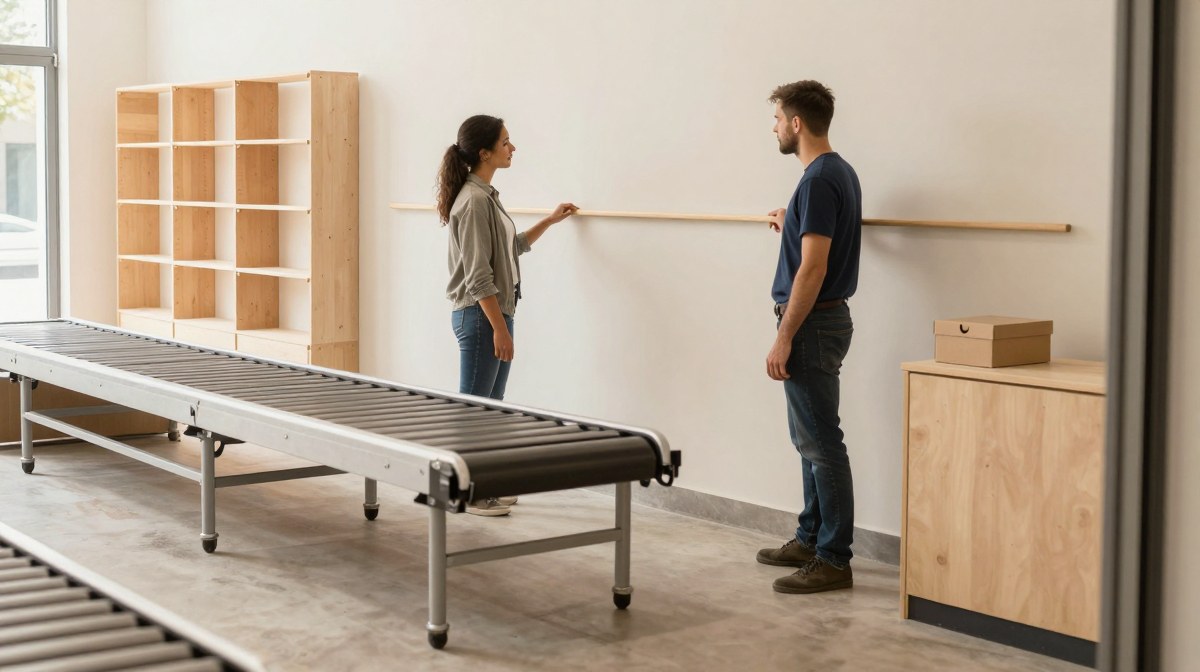
In short: Fund growth with business loans matched to what each dollar buys: a term loan for a fit-out, equipment finance for machines, a revolving facility for stock and wages, and owners' money or equity for pre-opening costs and early losses. Lenders want to see the ramp-up forecast, a slow-ramp case, and proof that the existing business can carry the repayments while the new part finds its feet.
Key takeaways
- Match the term of the debt to the life of what it funds; never fund a permanent need with a short facility or a loss with a long one.
- In the second-site example, $740,000 of cost splits into a term loan, equipment finance, a bank guarantee, extra overdraft and $150,000 of owners' funds.
- Lenders test the group, not the new site: the existing business must cover all repayments during the ramp-up.
- A ramp-up that runs twice as slow turned a group DSCR of 1.45 into 0.90 in the worked example.
- Equity suits growth that cannot be serviced from current cash flow, at the price of sharing ownership and profits.
Why does growth need its own approach to business finance?
Growth consumes cash before it produces it. A second site needs a fit-out, equipment, stock, a rent bond and staff months before it trades at full volume; a new contract needs extra wages weeks before the customer pays; a bigger stock range ties up money on the shelf. A business can be profitable and still run short of cash in the year it expands.
The rule that keeps growth finance safe is matching: the term of each facility should match the life of what it pays for. Business.gov.au's guide to growing your business treats a new site, new staff and new equipment as separate decisions, and lenders do the same. A five-year term loan used for stock that turns over every 60 days leaves you repaying principal on something you have already sold and re-bought. An overdraft used for a fit-out leaves a permanent debt sitting in a facility the lender reviews every year.
Which facility matches which growth cost?
| Growth cost | Facility that usually fits | Term (indicative) | Security |
|---|---|---|---|
| Fit-out of leased premises | Amortising term loan | 3 to 7 years, within the lease term | General security over the business, directors' guarantees, sometimes property |
| Machines, vehicles, ovens, IT | Equipment finance (chattel mortgage, lease or hire purchase) | Up to the useful life of the asset | The asset itself |
| Opening stock and ongoing stock | Overdraft, line of credit, trade finance | Revolving, reviewed yearly | General security, property, or the stock and debtors |
| Wages for a new contract | Revolving facility or invoice finance | Revolving | Debtors, general security |
| Rent bond on a new lease | Bank guarantee issued to the landlord | Length of the lease | Cash cover or a facility limit |
| Pre-opening costs and early losses | Owners' funds or equity | Permanent | None: lenders rarely fund losses |
For the asset lines, equipment finance explained covers how the asset carries its own security, and hospitality and fit-out finance covers why lenders treat a fit-out differently from a machine: once installed, it has almost no resale value.
How does a second site get funded? A worked example
Illustrative example. A bakery with one established shop signs a lease for a second site. Its costs before the new shop is trading normally:
| Cost | Amount | Funded by |
|---|---|---|
| Fit-out | $380,000 | Term loan, 5 years |
| Ovens, mixers and display cabinets | $140,000 | Equipment finance, 5 years |
| Opening stock | $40,000 | Increase in the overdraft limit |
| Rent bond | $30,000 | Bank guarantee to the landlord |
| Pre-opening wages, training and marketing | $60,000 | Owners' funds |
| Ramp-up losses until the shop breaks even | $90,000 | Owners' funds |
| Total | $740,000 | $590,000 of facilities, $150,000 from the owners |
At illustrative rates (examples, not offers) of 9.0% on the term loan and 8.5% on the equipment finance, the two amortising facilities cost $7,888 and $2,872 a month: $10,760 a month, or about $129,126 a year. Those repayments start before the new shop earns anything.
How do you forecast the ramp-up so a lender believes it?
A ramp-up forecast is believable when every assumption can be traced to evidence: the first shop's own history, the new site's foot traffic, the lease and the staffing roster. In the example, the owners expect the new shop to reach $125,000 of monthly sales once established, with ingredients at 32% of sales and fixed costs (rent, wages, utilities) of $65,000 a month.
| Months | Sales as % of mature level | Monthly sales | Monthly result | Cumulative result |
|---|---|---|---|---|
| 1 to 3 | 50% | $62,500 | -$22,500 | -$67,500 |
| 4 to 6 | 70% | $87,500 | -$5,500 | -$84,000 |
| 7 to 9 | 85% | $106,250 | +$7,250 | -$62,250 |
| 10 to 12 | 95% | $118,750 | +$15,750 | -$15,000 |
| Mature | 100% | $125,000 | +$20,000 | $240,000 a year |
Monthly result = sales x 68% (after ingredients) - $65,000. The low point is -$84,000 at month six, which is why the funding plan carries $90,000 of owners' money for ramp-up losses. A lender will ask for this table, the assumptions under it, and a slow case. Our guide to cash flow forecasts lenders accept sets out what makes one credible.
Can the existing business carry the debt during the ramp-up?
Lenders assess the group, not the new site. Assume the first shop produces EBITDA of $420,000 a year and already pays $150,000 a year on existing debt. On a simple EBITDA basis:
| Case | Group EBITDA | Total debt service | Group DSCR |
|---|---|---|---|
| Today, before expansion | $420,000 | $150,000 | 2.80 |
| Year 1, ramp-up as forecast | $405,000 | $279,126 | 1.45 |
| Year 1, every stage takes twice as long | $252,000 | $279,126 | 0.90 |
| Year 2, new shop mature | $660,000 | $279,126 | 2.36 |
The slow case is the one that decides the loan. If the new shop spends six months at 50% and six at 70%, it loses $168,000 in year one and the group cannot meet its repayments from earnings. A lender may respond by asking for a larger owners' contribution, a smaller fit-out, an interest-only period, or evidence that the first shop's earnings are stable enough to absorb a bad year. Run your own version in the working capital gap calculator to see how stock and debtor timing add to the cash need.
How do you fund hiring for a new contract?
Hiring is a working capital problem, not a term-debt problem. Illustrative example: a facilities maintenance business wins a contract that needs six extra staff, costing $1,700 a week each including super, so $10,200 a week. The client is invoiced monthly and pays 45 days after the invoice.
- The first invoice goes out at the end of month one and is paid about 75 days after work starts.
- By then the business has paid about 10 weekly payrolls: roughly $102,000.
- After that, receipts arrive monthly, but the gap never fully closes while the contract runs, because wages are always paid before the client pays.
Invoice finance suits this well: availability grows with each invoice issued under the contract. An overdraft increase also works, if the lender is comfortable with the client and the contract terms. Show the lender the contract, the client's payment history if you have one, and the payroll schedule. Remember the obligations beyond wages; business.gov.au's growth guide notes that hiring brings pay, leave and superannuation responsibilities.
When is equity a better answer than a loan?
Debt suits growth the existing business can service, as the year-one forecast case shows. Equity suits growth it cannot: a long ramp-up, a new product with no sales history, or an expansion several times the size of the current business. Business.gov.au's comparison of debt and equity funding puts the trade-off plainly: debt lets you keep full ownership, while equity means no debt repayments but giving up part of the business and its revenue and consulting investors on decisions.
Raising equity has its own rules. ASIC's fundraising guidance explains that a proprietary company can have no more than 50 non-employee shareholders and can raise money from the public only if the offer does not need a disclosure document. Most growth equity for small companies therefore comes from existing owners, staff, or sophisticated investors, with a lawyer handling the offer.
A middle path is to borrow from private investors instead of selling shares, which keeps ownership but usually costs more than bank debt and still needs repaying. Whatever the mix, lenders like to see owners' money at risk alongside theirs.
What evidence do lenders want for a growth loan?
- Track record: two to three years of financials for the existing business, and its history of meeting repayments.
- The growth plan: quotes for the fit-out and equipment, the signed or draft lease, and the contract for any new work.
- The forecast: monthly for at least 12 months, with a base case and a slow case, showing group repayments.
- Management capacity: who runs the new site or contract, and who covers the owner's old role.
- Owners' contribution: evidence of the funds going in, and where they came from.
Business.gov.au's business loan guidance lists the same core documents: identification, a business plan, financial reports, forecasts and lease agreements. Banks generally want all of this plus security, and favour businesses whose first site already proves the model. Non-bank lenders may accept thinner evidence for smaller amounts at higher prices, and equipment financiers focus mainly on the asset. When the plan is ready, post one business growth loan request on ADS and 200+ verified lenders and brokers can ask about it. Talk to your accountant about the tax treatment of the fit-out and equipment before you sign.
Frequently asked questions
Can I get a business loan to open a second location?
Often, if the existing business can service all the repayments during the ramp-up and the owners contribute to the costs lenders will not fund, such as pre-opening wages and early losses. Lenders usually split the funding: a term loan for the fit-out, equipment finance for the assets and a revolving facility for stock.
Will a lender fund losses while a new site ramps up?
Rarely directly. Lenders expect early losses to be covered by the owners or by the existing business's cash flow, and they size the loan so the group can still meet repayments in a slow case. A larger owners' contribution is the usual answer when the slow case does not work.
Should I use an overdraft to fund a fit-out?
Usually not. A fit-out is a long-lived cost with almost no resale value, so it suits an amortising term loan that is repaid over a period within the lease. Putting it in an overdraft leaves a permanent debt in a facility the lender reviews every year and can reduce.
Is it better to borrow or take on an investor to grow?
Borrowing keeps ownership and profits with you but needs repayments the business can meet now. An investor provides money with no repayments but takes a share of ownership, profits and decisions. Debt suits growth the current business can service; equity suits growth that cannot be serviced from today's cash flow.
How much should owners contribute to an expansion?
There is no fixed rule and it varies by lender, but lenders commonly expect the owners to fund the costs they will not, such as pre-opening expenses and early losses, and to have money at risk in the project. In the worked example the owners put in $150,000 of $740,000, about 20%.
Related reading
- Hospitality and Fit-Out Finance
- Equipment Finance Explained: Funding Assets Without Draining Cash
- Cash Flow Forecasts Lenders Accept
Sources
- Guide to growing your business — business.gov.au
- Choose your funding: debt vs equity — business.gov.au
- Fundraising: who can raise funds from investors — Australian Securities and Investments Commission
- Business loan guidance — business.gov.au
Information current as at 24 October 2026.
General advice warning: This article contains general information only. It does not take into account your objectives, financial situation or needs, and it is not personal credit or financial advice. Consider whether it is appropriate for you and seek advice from a licensed credit representative before acting.
Any interest rate shown is an example only and is not an offer of credit. Where a rate is quoted, the applicable comparison rate is available from the relevant lender and should be considered alongside it.
Tags
Related Posts

Working Capital Loans: Sizing a Facility to Your Cash Conversion Cycle
Size a working capital loan from your cash conversion cycle, not from a round number. Add debtor days and inventory days, subtract creditor days, and multiply the result by your daily cost of sales...
Land Subdivision Finance: Funding Lots From Approval to New Titles
Land subdivision finance funds the period between subdivision approval and the issue of new titles: buying or refinancing the englobo land, paying for civil works and council contributions, and car...

Cost Overruns on a Build: Variations, Contingency and Funding the Gap in a Construction Loan
A cost overrun stops a construction loan when the cost to complete exceeds the undrawn loan plus the cash you have committed. Lenders then hold the next draw until you cover the gap, because their...