
Land Subdivision Finance: Funding Lots From Approval to New Titles
ADS Team
Author
November 14, 2026
2 days ago
25
views
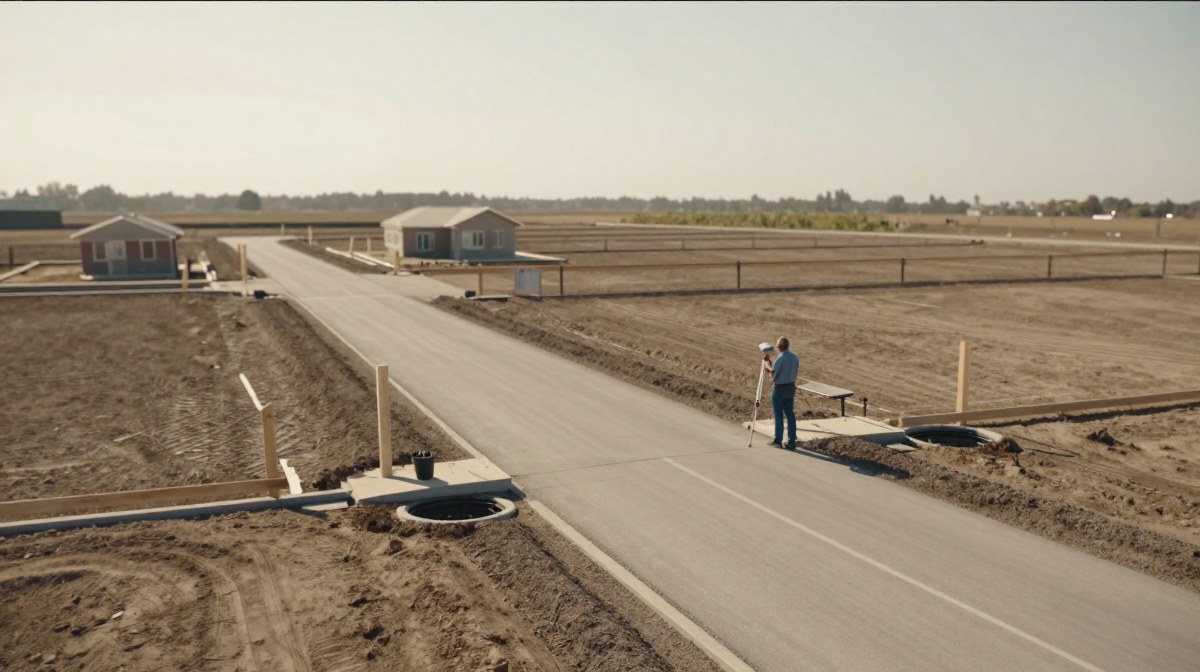
In short: Land subdivision finance funds the period between subdivision approval and the issue of new titles: buying or refinancing the englobo land, paying for civil works and council contributions, and carrying interest and land tax until lots settle. A subdivision lender values each finished lot, sets how much of each settlement repays the loan, and watches the timeline closely, because a late plan registration delays every settlement at once.
Key takeaways
- The main costs are englobo land, civil works, council contributions and authority charges, consultants, contingency, finance and holding costs such as land tax.
- In the worked example, 20 lots selling for $480,000 each return 17.3% on a total cost of $7.673 million.
- Lenders value each lot "as if titled" and take most or all of each settlement until the loan is repaid; the release terms decide when you see cash.
- Staging the subdivision can reduce peak debt, because early lot settlements repay part of the loan before later civil works are drawn.
- Land tax is assessed on a fixed date each year in each state, for example land owned at midnight on 30 June in Queensland.
- Every month the titles are late costs interest on the whole facility: $37,500 a month on $5 million at an illustrative 9%.
What does land subdivision finance pay for?
A subdivision turns one parcel of land, often called englobo land, into individual lots with their own titles. The finance covers each step between the subdivision approval and the sale of those lots.
- The land, either bought with the loan or refinanced from an existing loan.
- Civil works: earthworks, roads, kerbs, stormwater and drainage, sewer and water mains, electricity and telecommunications conduits, street lighting and landscaping.
- Council contributions and authority charges: development contributions or infrastructure charges set by the consent, and connection or headworks charges from water, sewer and power authorities.
- Consultants: surveyors, civil engineers, planners, environmental and traffic consultants.
- Bonds: councils often require a bond, commonly a bank guarantee, for works on maintenance after handover or for works not yet complete when the plan is signed off.
- Holding costs: interest, land tax, council rates and insurance until the lots settle.
Unlike a building project, most of the money goes into the ground, where a valuer cannot see it. A half-finished subdivision with roads partly formed and services partly laid is worth little more than the englobo land, so lenders watch progress and costs closely. For how these facilities are drawn and secured in general, see construction and development finance.
What does a subdivision feasibility look like? A worked example
For illustration: a 20-lot residential subdivision on englobo land bought for $3,000,000, with lots selling for $480,000 each including GST. Every figure is an example only; civil works and contributions in particular vary enormously between sites and councils.
| Line | Amount |
|---|---|
| Englobo land | $3,000,000 |
| Acquisition costs (duty, legal; state-specific) | $165,000 |
| Civil works (20 x $120,000, excluding GST) | $2,400,000 |
| Council contributions and authority charges (20 x $40,000) | $800,000 |
| Consultants: survey, engineering, planning | $300,000 |
| Contingency (10% of civil works) | $240,000 |
| Finance costs | $420,000 |
| Land tax and rates during the project | $60,000 |
| Selling costs (3% of $9,600,000) | $288,000 |
| Total development cost | $7,673,000 |
| Gross realisation (20 x $480,000) | $9,600,000 |
| Less GST under the margin scheme (($9,600,000 - $3,000,000) / 11) | -$600,000 |
| Net realisation | $9,000,000 |
| Profit | $1,327,000 (17.3% on cost) |
Contingency is higher here than on a building project because ground conditions are the great unknown in civil works: rock, poor soil, contamination, groundwater or a sewer connection that has to run further than planned. The sale of subdivided residential lots by a registered developer is generally a taxable supply under the GST Act; whether the margin scheme is available depends on how the land was bought, so confirm it with your accountant before relying on it.
How do lenders value each lot, and what are release prices?
The lender's valuer usually reports the englobo value of the land as it is today, and an "as if complete" value for each lot once titled, based on recent sales of comparable lots nearby. The sum of the lot values is the gross realisation. Some reports also give a bulk value, what all the lots would fetch if sold to one buyer, which is lower and shows the lender its downside.
As lots settle, the lender takes money to reduce the loan. Two common structures (indicative):
| Structure | How it works | In the example (loan $5,000,000) |
|---|---|---|
| Full sweep | All net settlement proceeds go to the lender until the loan is repaid | About $435,600 net per lot repays the loan after 12 settlements; you receive nothing until then |
| Release price per lot | A set amount per lot, often a margin above the loan divided by the number of lots | At 115% of $250,000 per lot, the lender takes $287,500 per lot and is repaid after about 18 settlements; you receive $148,100 from each settlement along the way |
The net figure per lot is the $480,000 price less GST of $30,000 under the margin scheme (($480,000 - $150,000 land cost per lot) / 11) and selling costs of $14,400. The release terms decide when you get your equity back, so negotiate them as hard as the rate.
Why stage a subdivision?
Building every lot's civil works at once means drawing the whole facility before a single lot settles. Staging, say two stages of ten lots, lets the first stage's settlements repay part of the loan before the second stage's civil works are drawn. That usually reduces peak debt and interest, and it tests the market before you commit the rest of the money.
The trade-offs: civil contractors often price a single large contract more keenly than two smaller ones, some infrastructure (a trunk sewer, a road intersection or a detention basin) must be built in the first stage regardless, and each stage needs its own council sign-off and plan registration. Lenders generally like staging, and often ask for evidence that stage 1 has sold before they fund stage 2 (indicative).
Do lenders want lot pre-sales?
Often, yes, at least for part of the first stage (indicative; it varies by lender and market). A lot pre-sale is a contract signed before titles exist, conditional on the plan being registered. Lenders count it only if it meets their rules: a proper deposit, an arm's-length buyer, a price near the valuation and a sunset date with enough room for delays.
Lot buyers bring a particular risk. Many will need their own finance at settlement, and many plan to build a house straight away, so their ability to settle depends on credit conditions when the titles arrive, not when they signed. The ABS Lending Indicators release reports lending for residential land as its own series, a useful gauge of how lot buyers' finance is moving. Lenders also note how GST is collected at settlement: for new subdivided residential lots, the buyer generally withholds an amount and pays it to the ATO, as set out in the ATO's GST at settlement guidance, so the cash that reaches the lender is net of it.
How do land tax and other holding costs affect a subdivision?
Land tax is a state tax, and each state sets its own rules, thresholds and assessment date. In Queensland, for example, the Queensland Revenue Office explains that land tax is based on the land you own at midnight on 30 June each year. In NSW, Revenue NSW describes land tax as a tax on the value of unimproved land. Englobo land held by a developer is usually taxable, and once the plan is registered, each unsold lot is a separate parcel. Some states have concessions for newly subdivided lots that have not yet sold; check with your revenue office rather than assuming one applies.
Holding costs grow with time, and in a subdivision time is the hardest thing to control. In the example, interest on a $5,000,000 facility at an illustrative 9% is $37,500 a month. Add land tax and council rates on the englobo land or unsold lots, insurance and site maintenance. The state taxes on property are shifting in some states; stamp duty vs land tax covers that change.
What causes delays between civil works and new titles?
Titles issue only at the end of a chain of sign-offs, and any link can hold up the lot settlements.
- Engineering design accepted by council and the service authorities.
- Civil works built and inspected.
- Compliance certificates from the water, sewer and power authorities.
- Council sign-off on the final plan of subdivision, called a subdivision certificate in NSW and a statement of compliance in Victoria, often with bonds for outstanding works.
- Registration of the plan at the land titles office, after which new titles issue and lot settlements can proceed.
Authority sign-offs are the usual cause of slippage, because they are outside your control and queue-dependent. A three-month delay in the example costs $112,500 in interest alone, before land tax, and pushes every settlement back. If lot contracts carry sunset dates, a long delay can also put pre-sales at risk.
Plan for it. Build a realistic program with float for authority sign-offs, keep the interest allowance in the facility above the base case, and know what the lender will do if the program runs past the loan's term: extend, charge default interest, or ask for more equity.
Which lenders fund subdivisions, and what should you prepare?
Banks fund subdivisions for experienced developers with lower leverage and, often, lot pre-sales; non-bank lenders and private credit funds fill the gaps at higher cost and with more flexibility on pre-sales and staging (indicative). Infrastructure decisions can change the value of a growth-area subdivision, so understanding infrastructure-led growth signals helps when you argue for your lot prices.
- The subdivision approval and conditions, with contributions calculated.
- Civil engineering drawings and a tendered or quantity surveyor-checked cost.
- Comparable lot sales and a sales plan by stage.
- A program that includes authority sign-offs, plan registration and settlement.
- A feasibility study and cash flow, tested in the development feasibility calculator.
- Your equity and the release terms you want.
When the package is ready, post one development finance request on ADS and 200+ verified lenders and brokers can ask about it.
Frequently asked questions
How much deposit do I need for land subdivision finance?
It depends on the lender, the site and your experience, but subdivision lenders commonly expect substantial equity, often a larger share of cost than on a building project, because unfinished civil works add little value (indicative). In the illustrative example, a $5 million loan on a $7.673 million project leaves about $2.67 million of equity.
What are civil works in a subdivision?
The physical works that turn a parcel into lots: earthworks, roads and kerbs, stormwater and drainage, sewer and water mains, electricity and telecommunications conduits, street lighting and landscaping. They are usually the largest cost after the land, and ground conditions make them the hardest to predict.
When can I settle lot sales in a subdivision?
Only after the plan of subdivision is registered and new titles issue. That follows completion of the civil works, authority compliance certificates and council sign-off on the plan. Lot contracts signed earlier are usually conditional on registration and settle a set number of days after it.
Do I pay land tax during a subdivision?
Usually yes, on the englobo land and then on unsold lots, depending on your state's rules and how the land is owned. Each state sets its own assessment date and thresholds; Queensland, for example, assesses land owned at midnight on 30 June. Some states offer concessions for newly subdivided lots, so check with your revenue office.
What is a release price in subdivision finance?
The amount the lender takes from each lot settlement to reduce the loan. It is often set above the loan divided by the number of lots, for example 115%, so the loan is repaid before the last lots sell. Some lenders instead take all net proceeds until the loan is repaid.
Related reading
- Construction and Development Finance
- Stamp Duty vs Land Tax: The Shift
- Infrastructure-Led Growth: Reading the Signals
Sources
- A New Tax System (Goods and Services Tax) Act 1999 — Federal Register of Legislation
- Land tax — Queensland Revenue Office
- Land tax — Revenue NSW
- Lending Indicators (including residential land lending) — Australian Bureau of Statistics
- GST at settlement — Australian Taxation Office
Information current as at 24 October 2026.
General advice warning: This article contains general information only. It does not take into account your objectives, financial situation or needs, and it is not personal credit or financial advice. Consider whether it is appropriate for you and seek advice from a licensed credit representative before acting.
Any interest rate shown is an example only and is not an offer of credit. Where a rate is quoted, the applicable comparison rate is available from the relevant lender and should be considered alongside it.
Related Posts

Business Loans to Fund Growth: Hiring, Stock and a Second Site
Fund growth with business loans matched to what each dollar buys: a term loan for a fit-out, equipment finance for machines, a revolving facility for stock and wages, and owners' money or equity fo...

Working Capital Loans: Sizing a Facility to Your Cash Conversion Cycle
Size a working capital loan from your cash conversion cycle, not from a round number. Add debtor days and inventory days, subtract creditor days, and multiply the result by your daily cost of sales...

Cost Overruns on a Build: Variations, Contingency and Funding the Gap in a Construction Loan
A cost overrun stops a construction loan when the cost to complete exceeds the undrawn loan plus the cash you have committed. Lenders then hold the next draw until you cover the gap, because their...