
Private Loans Secured by Vacant Land: LVRs, Holding Costs and Exits
ADS Team
Author
November 16, 2026
about 18 hours ago
13
views
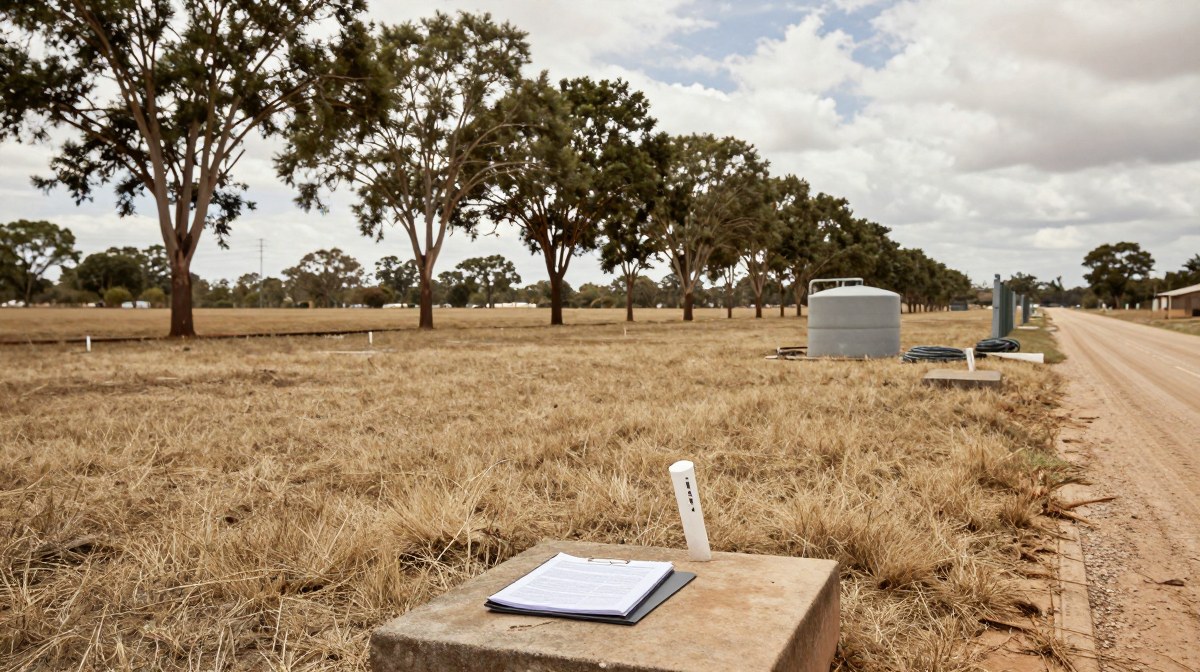
In short: Private loans secured by vacant land usually come with lower LVRs than loans on built property, because land produces no income, can take longer to sell and is worth what its zoning and planning approvals allow. Budget for holding costs (interest, land tax, rates, insurance and upkeep), which come to about 8.4% of the land value for a year in the worked example, and agree the exit before you borrow: a sale, a refinance, or a building or project loan once planning approvals are in place.
Key takeaways
- Vacant land supports a lower LVR than built property; private lenders often cap it somewhere around 50% to 65% (indicative), depending on zoning, location and planning approvals.
- Land earns no rent, so interest is usually prepaid or capitalised and the loan is repaid from a sale or a refinance.
- Vacant land is subject to land tax: NSW assesses land owned at midnight on 31 December, Queensland at midnight on 30 June.
- In the worked example, holding a $1,500,000 block with a $900,000 loan costs about $125,900 for the first year.
- Lenders value land as it stands; development potential counts once a development approval is granted, not before.
- A 12-month loan rarely survives an 18-month planning approval process, so build in time and check the extension terms.
Why do lenders offer lower LVRs on vacant land?
A lender secured on vacant land is relying on something that earns nothing, may take months to sell, and is valued on what it could become. Each of those features cuts the amount it will lend:
- No income. There is no rent to service the loan, so repayment depends on your other income, a sale or a refinance.
- A narrower buyer pool. Buyers of land need their own plans, planning approvals and finance, and many lenders are cautious about land, so demand falls away sharply in a soft market.
- Value depends on planning. Zoning, overlays (flood, bushfire, heritage, environmental), access, services and easements decide what can be built, and so what the land is worth.
- Holding costs keep running while the land sits, eating into the equity that protects the lender.
| Land type | Indicative private lending LVR | Why |
|---|---|---|
| Serviced residential lot in an established area | 55% to 65% | A deeper buyer pool and clear use |
| Unserviced or fringe residential land | 45% to 60% | Servicing costs and slower sales |
| Development land without planning approval | 40% to 55% | Value depends on planning approvals not yet granted |
| Land with a development approval | 50% to 65% of the as-is value | The planning approval adds value, but less than a finished project |
| Rural or lifestyle acreage | 40% to 60% | A thin market and long marketing periods |
These ranges are indicative only and vary by lender, location and borrower. Some banks lend more on residential land where the borrower can service the loan from income, but many have little appetite for unapproved development land.
What does it cost to hold vacant land?
Land tax is the cost owners most often forget, because vacant land has no principal place of residence exemption to fall back on. The rules are state-based:
- NSW. Revenue NSW calculates land tax on the land value of all taxable land owned at midnight on 31 December each year, using a three-year average of the Valuer General's unimproved land values. The threshold is measured against your total holdings, not each property, and land in special or discretionary trusts does not get it. Its thresholds and rates page lists a general threshold of $1,075,000, with tax of $100 plus 1.6% of the land value above it, up to the premium threshold.
- Queensland. The Queensland Revenue Office charges land tax on land you own at midnight on 30 June each year, including vacant land, above a threshold that depends on the type of owner.
- Victoria. Land tax is an annual tax on the total value of taxable land, and the SRO also runs a separate vacant residential land tax; check the SRO's land tax pages for whether it covers your land.
For illustration, a NSW block with a three-year average land value of $1,500,000, owned by an individual with no other taxable land, funded with a $900,000 private loan (60% LVR):
| First-year holding cost (illustrative) | Amount |
|---|---|
| Interest: $900,000 at an example 10.5%, paid or prepaid | $94,500 |
| Establishment fee: example 2% | $18,000 |
| Land tax: $100 + 1.6% x ($1,500,000 - $1,075,000) | $6,900 |
| Council rates (example) | $4,000 |
| Insurance, fencing, slashing and upkeep (example) | $2,500 |
| Total | $125,900 (about 8.4% of the land value) |
If the owner's other taxable land already uses up the threshold, the extra land tax on this block is closer to 1.6% x $1,500,000 = $24,000. Holding land in a discretionary trust changes the figure again. Ask your accountant before you choose the ownership structure.
How do zoning and development potential affect the loan?
Lenders value land as it stands, under its current zoning and with the planning approvals it actually has. A block that could take ten townhouses is valued as a block until council grants a development approval, and even then most lenders value it as land with a planning approval rather than as finished dwellings.
Expect the lender to ask for:
- A planning or zoning certificate showing the zoning and any overlays.
- A survey or title plan, with easements and access.
- Evidence that services (water, sewer, power) are available or what connecting them would cost.
- Any development approval or DA lodged with council, with plans and conditions.
- A contamination report for former industrial, agricultural or service station sites.
The planning approval is often the whole point of the loan: buy or hold the land, secure the planning approval, then sell or refinance at the higher value. That is a sound plan only if the term allows for council timelines, objections and amendments, which are outside your control.
What exits do lenders accept for a vacant land loan?
| Exit | What the lender wants to see | Main risk |
|---|---|---|
| Sale of the land | An agent's appraisal, a marketing plan and recent settled land sales | Land sells slowly in a soft market |
| Sale with a development approval | A DA lodged with council, consultants engaged and a realistic timeline | Council delays, conditions or refusal |
| Refinance to a bank land loan | Income that services the loan and land the bank accepts | Bank policy on land and on your income |
| A building loan when work starts | Plans, a fixed-price building contract and the builder's details | Cost escalation and the build lender's LVR |
| Project finance for a subdivision or development | Development approvals, a feasibility study, presales where needed | The project lender's equity and presale requirements |
For the last two, the post on construction and development finance explains how those lenders size a loan and what they need from you; lining one up early is the cleanest exit for a land loan. For how short-term lenders judge exits generally, see exit strategies for short-term loans.
Worked example: what happens if the planning approval takes longer?
Take the same $900,000 loan on the $1,500,000 block, now with interest capitalised monthly at an example 10.5%. The plan is to secure a development approval and refinance at month 12. The planning approval slips to month 18.
| Exit at 12 months | Exit at 18 months | |
|---|---|---|
| Capitalised interest | $99,183 | $152,801 |
| Loan balance | $999,183 | $1,052,801 |
| LVR on $1,500,000 | 66.6% | 70.2% |
The six-month delay costs $53,618 in extra interest. Add an example 1% extension fee ($9,000), another half-year of rates, insurance and upkeep ($3,250), and, in NSW, a second year of land tax if ownership runs past another 31 December ($6,900). The delay costs about $72,768 in total, and the balance has drifted above a 65% LVR cap, so the lender may refuse an extension or ask for a paydown. If the planning approval adds less than that to the land's value, the delay has eaten the gain.
Model your own term and capitalised interest with the bridging finance calculator, then add a buffer of months, not weeks.
How do banks, non-banks and private lenders treat vacant land?
| Lender type | Typical approach (indicative) | Suits |
|---|---|---|
| Banks | Residential land loans for borrowers who can service them; some expect building to start within a set period; little appetite for unapproved development land | A serviced lot you will build on, with income to support the loan |
| Non-bank lenders | Some land loans with more flexible income evidence, at higher rates | Self-employed borrowers with land in established areas |
| Private lenders | Business-purpose loans on equity and exit; lower LVRs; prepaid or capitalised interest; terms often 6 to 24 months | Holding land through a planning approval, or bridging to a sale or refinance |
Private rates are set lender by lender, while bank land loans track the wider rate environment; the RBA's cash rate target was 4.60% from 30 September 2026, so check the current figure when you test a bank refinance as your exit.
What are the common mistakes, and what should you do next?
- Borrowing on the value the land would have with a planning approval it does not yet have.
- Leaving land tax, rates and upkeep out of the budget.
- Choosing an ownership structure without checking its land tax treatment.
- Setting a 12-month term for a process that commonly takes longer.
- Assuming an extension will be available when the LVR has drifted above the lender's cap.
Before you ask, prepare the title, zoning certificate, any planning approvals, a cost budget for the holding period and written evidence of the exit. Then post one private loan request on ADS with the land details and your plan, and 200+ verified lenders and brokers can ask about it.
Frequently asked questions
What LVR can I get on vacant land?
Lower than on built property. As an indicative guide, private lenders often cap vacant land loans around 50% to 65% of their valuation, with serviced residential lots at the higher end and unapproved development or rural land lower. Banks may lend more on residential land where you can service the loan from income.
Do you pay land tax on vacant land?
Generally yes, if your total taxable land is above your state's threshold, because vacant land has no home exemption. NSW assesses land you own at midnight on 31 December and Queensland at midnight on 30 June. Trusts and companies can be treated differently, so check your state revenue office and speak to your accountant.
Can I get a private loan on land without a development approval?
Yes, but the lender will value it as it stands, under its current zoning, and lend a lower percentage. Development potential counts once a planning approval is granted, and even then lenders value it cautiously. A loan that relies on a planning approval to exit needs a term that allows for council delays.
How is interest paid on a vacant land loan?
Because land earns no income, interest is often prepaid from the advance or capitalised onto the loan rather than paid monthly. Capitalised interest raises the balance over time: in the example, 18 months at an example 10.5% lifts a $900,000 loan to about $1,052,801, moving the LVR from 60% to about 70.2%.
What is the exit for a vacant land loan?
A sale, a refinance to a bank land loan, a building loan when work starts, or project finance once planning approvals are in place. Lenders want evidence: an agent's appraisal and sales plan, a bank's indicative terms, or a DA lodged with council plus a builder or a project budget.
Is vacant land harder to sell?
It often takes longer, because the buyer pool is narrower and buyers need finance, plans and planning approvals of their own. That is why lenders allow for longer marketing periods in their valuations and LVRs. Serviced lots in established areas usually sell more readily than englobo, rural or heavily constrained land.
Related reading
- Exit Strategies: How Short-Term Loans Get Repaid
- Construction and Development Finance
- What Private Lending Actually Costs in Australia
Sources
- How land tax is calculated — Revenue NSW
- Land tax thresholds and rates — Revenue NSW
- Land tax — Queensland Revenue Office
- Land tax — State Revenue Office Victoria
- Cash rate target — Reserve Bank of Australia
Rates checked as at 24 October 2026. Interest rates, lender policies and government schemes change frequently. Figures in this article are illustrative and were accurate at the date shown.
General advice warning: This article contains general information only. It does not take into account your objectives, financial situation or needs, and it is not personal credit or financial advice. Consider whether it is appropriate for you and seek advice from a licensed credit representative before acting.
Any interest rate shown is an example only and is not an offer of credit. Where a rate is quoted, the applicable comparison rate is available from the relevant lender and should be considered alongside it.
Tags
Related Posts

Peer-to-Peer Lending and ASIC: The Managed Investment Schemes Behind the Platforms
Most peer-to-peer lending platforms in Australia pool investors' money, and pooled investments are managed investment schemes under the Corporations Act. That brings ASIC rules with it: an AFS lice...

First vs Second Mortgage Private Loans: How Ranking Changes Price and Risk
A first mortgage is repaid first from the proceeds of an enforced sale; a second mortgage is repaid only from what is left. That ranking is why second mortgage private loans cost more: the second l...
Private Loan Valuations: Why the Lender's Valuer Often Comes In Lower
A private loan valuation is done for the lender, by a valuer on its panel, asking what the property would realistically fetch if the lender had to sell it within months. That is a narrower question...