
Commercial Property Loans for Industrial and Warehouse Assets
ADS Team
Author
November 6, 2026
about 12 hours ago
8
views
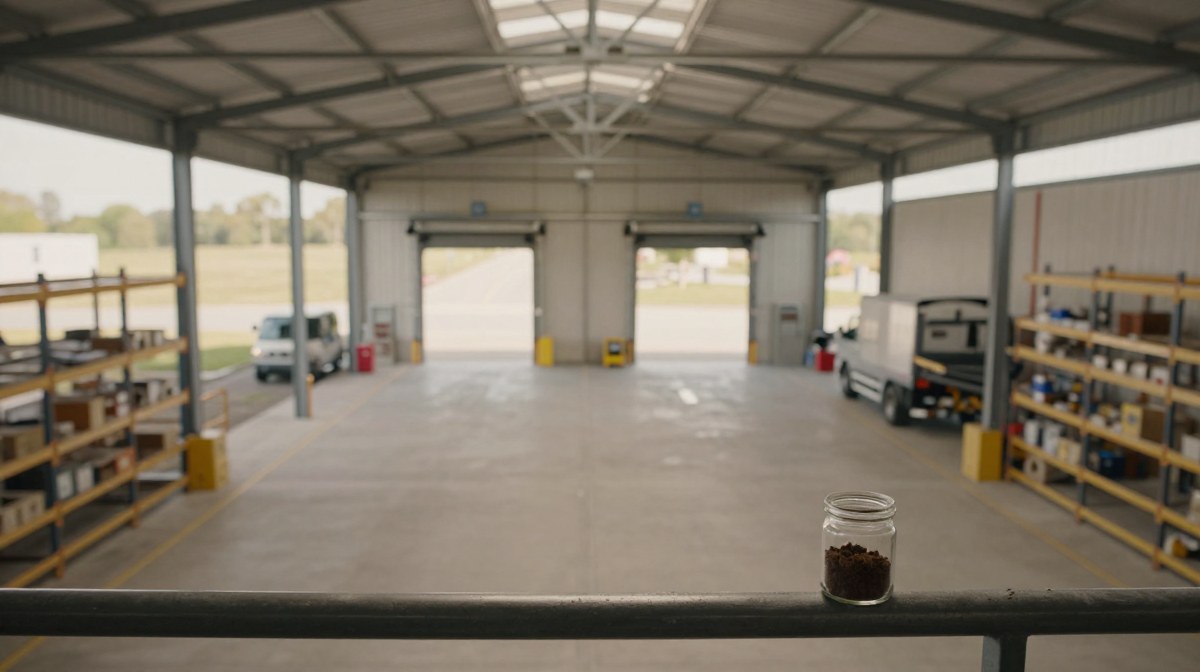
In short: Lenders generally like standard industrial property: simple buildings, broad tenant demand and land that holds value. Commercial property loans on warehouses are sized at the lower of an LVR on the valuation and what the rent or business profit can service. Appetite drops for specialised improvements such as cold stores, for sites with contamination risk or awkward zoning, and for secondary locations with poor truck access. Owner-occupiers are assessed on business profit, investors on rent and lease terms.
Key takeaways
- Standard warehouses with good access, clearance and hardstand attract the broadest lender appetite; specialised buildings are valued and lent on more cautiously.
- Land value often underpins industrial valuations - in the worked example the land alone is worth more than the loan the rent supports.
- Interest cover, not LVR, often sets the loan on lower-yielding property: here a 1.5 times ICR test limits the loan to about 55% of value.
- Contamination is a lender's question, not just a buyer's: expect an environmental report for former fuel, chemical or manufacturing sites.
- Check zoning, overlays and permitted uses before you sign; a building that cannot legally be used as planned is worth less to everyone.
- The RBA reports strong industrial fundamentals, though new supply has eased growth in valuations and rents.
Why do lenders like industrial property?
A standard warehouse is a simple asset: a shed, a yard, an office and a loading dock. It needs less capital spending than an office tower, suits a wide range of tenants, and if the building ages the land still has value. Those features make it easy for a lender to picture who would buy or lease it after a default.
The market backdrop has helped. The RBA's October 2026 Financial Stability Review reports that fundamentals remain strong in the industrial sector, reflecting ongoing demand for warehousing and distribution centres, though new supply has eased growth in valuations and rents. It also notes that commercial real estate loans have risen as a share of banks' assets in recent years, driven by major bank lending particularly in the industrial sector - so competition for good industrial loans is real.
"Industrial" covers a wide range, though, and lender appetite follows the building's flexibility:
| Asset | Lender appetite (general) | Why |
|---|---|---|
| Modern warehouse or distribution centre in an established industrial area | Broad | Generic use, deep tenant pool, strong land value |
| Small strata industrial unit | Moderate | Popular with owner-occupiers, but small lots and strata levies narrow the field |
| Older warehouse with low clearance or poor access | Moderate to narrow | Fewer modern tenants; value rests more on land |
| Specialised building (cold store, food processing, heavy manufacturing) | Narrow | Improvements suit one user; alternative use value is lower |
| Site with known or suspected contamination | Narrow until assessed | Clean-up cost and liability can exceed the equity |
What features do valuers and lenders look at?
- Location and access - proximity to motorways, ports and labour, and whether semi-trailers and B-doubles can get in, turn and leave.
- Clearance height and floor loading - higher internal clearance suits modern racking and more tenants.
- Hardstand and site coverage - yard space for trucks and storage; a lower building-to-site ratio leaves room to expand.
- Power, sprinklers and services - adequate power and fire services; upgrades are expensive.
- Office component - a modest office is normal; a large one can be hard to lease to industrial users.
- Zoning and overlays - the planning zone, permitted uses, and flood, bushfire or heritage overlays. A business that needs a use the zone does not allow cannot rely on the building.
Valuers use capitalisation of net income for leased property and direct comparison - sales on a rate per square metre of building and of land - for both leased and owner-occupied property, and then reconcile the two. For industrial property the land rate matters more than in most sectors, because it supports the value as the building ages.
How is a warehouse loan sized in practice?
A worked example, figures for illustration only. A 2,000 square metre warehouse on a 4,000 square metre site is leased to one tenant at $240,000 a year net ($120 per square metre of building). The valuer capitalises the rent at 6.0%, giving $4,000,000, and notes the land alone is worth about $600 per square metre - $2,400,000, or 60% of the value.
| Test | Calculation | Maximum loan |
|---|---|---|
| 65% LVR (illustrative) | $4,000,000 x 65% | $2,600,000 |
| Interest cover of 1.5 times at an illustrative 7.25% | $240,000 ÷ 1.5 = $160,000 of interest ÷ 7.25% | $2,206,897 |
| Loan offered (the lower) | $2,206,897 (55.2% LVR) |
At the full $2,600,000, interest at 7.25% would be $188,500 and the ICR only 1.27 times, so the rent, not the value, limits the loan. That is common on lower-yielding property when rates are higher, and base rates did rise in 2026 - the RBA's cash rate target was 4.60% from 30 September 2026. Notice too that the land value of $2,400,000 is about 109% of the loan the rent supports, which is exactly why lenders are comfortable with well-located industrial land. Run your own numbers through the commercial LVR and security calculator.
How do lenders treat owner-occupiers and investors differently?
| Owner-occupier | Investor | |
|---|---|---|
| Main servicing source | The business's profit, with the rent it no longer pays added back | Net rent from the tenant |
| Key test | Debt service cover across all business debt | Interest cover on net income, plus LVR |
| Lease | Related-party lease at market rent, often valued as if vacant | Arm's length lease: term, reviews, outgoings, security |
| Main risk to the lender | The business fails and the property is vacant | The tenant leaves at expiry |
| Documents | Business financials, tax returns, management accounts | Lease, tenancy history, outgoings budget, investor's own position |
An owner-occupier also often needs plant, racking or forklifts. Those are usually funded separately - our guide to equipment finance covers that side - so the property loan is not stretched to cover assets that depreciate.
Which lease terms matter on an industrial investment?
- Net lease - the tenant pays outgoings such as rates, insurance and maintenance, so net income is predictable.
- Term and options - a long remaining term with a strong tenant supports a lower cap rate and higher leverage; a lease expiring within a year or two attracts a vacancy allowance.
- Rent reviews - fixed percentage or CPI increases are easier to underwrite than market reviews that could fall.
- Make good - the tenant's obligation to restore the premises at the end, which protects value after a heavy-use tenant leaves.
- Security - a bank guarantee or bond, and personal guarantees from the tenant's directors for a private company tenant.
- Single-tenant concentration - one tenant means income goes from 100% to 0% at once. Lenders price for that.
How lenders turn a lease into loan terms is covered in lease doc loans based on rental income.
What happens with specialised buildings and contamination?
Specialised improvements. A cold store, food processing plant or heavy manufacturing building can be worth a lot to its current user and much less to anyone else. Valuers often report an alternative use value as well as market value, and some lenders lend off the lower figure. For illustration, a cold store bought for $5,000,000 may be valued at $4,500,000, with an alternative use value as a dry warehouse of $3,600,000. At 65%, that is the difference between a $2,925,000 loan and a $2,340,000 one - $585,000 more equity.
Contamination. Former service stations, chemical stores, workshops and some manufacturing sites can carry soil or groundwater contamination. Because liability can attach to the owner, lenders commonly ask for an environmental site assessment on higher-risk sites - a desktop history first, then sampling if the history suggests a problem - and may decline or reduce the loan until it is clear. Ask the seller for any reports early, and budget for your own.
Which duty and GST rules affect industrial property?
This is general information, not tax advice. Duty is a state matter. In Victoria, warehouses and factories are among the common qualifying uses for the commercial and industrial property tax, which applies after an entry transaction on or after 1 July 2024 and a 10-year transition, at 1% of site value a year - see the State Revenue Office's guide to understanding commercial and industrial property tax. Other states charge transfer duty on purchase in the usual way.
For GST, a tenanted warehouse sold with its lease can be GST-free as a going concern under section 38-325 of the GST Act, if the buyer is registered and both parties agree in writing. A vacant warehouse bought by an owner-occupier usually carries GST, which a registered buyer then claims back - plan the cash for the gap.
How do banks, non-banks and private lenders compare on industrial property?
| Lender type | Typical industrial appetite (general, varies by lender) | Trade-off |
|---|---|---|
| Banks | Standard warehouses in established areas, strong tenants or profitable owner-occupiers, full financials | Lower pricing; stricter on specialised buildings, contamination and documentation |
| Non-bank lenders | Older buildings, single tenants with short leases, low-doc owner-occupiers | Higher pricing and fees; often shorter terms |
| Private lenders and credit funds | Vacant or specialised sites, short-term holds, value-add plans | Short-term pricing; needs a clear exit to longer-term debt |
A loan that does not fit a bank today may fit one later. A common path is to buy a vacant or tired warehouse with a non-bank loan, lease it or occupy it for a year or two, then refinance to a bank once there is a lease or trading history behind it. Build the refinance into the plan, including the costs of switching lenders.
How do you prepare an industrial loan request?
- The contract, the lease and tenancy history, or two years of business financials if you will occupy.
- Site plans, building area, clearance, power and access details.
- The zoning certificate and any overlays, plus council or fire safety notices.
- Any environmental reports, and the site's past uses.
- Your own asset and liability position and the source of the deposit.
For how property security works across business lending more generally, see secured business loans and property security. When the file is ready, post one commercial property loan request on ADS and 200+ verified lenders and brokers can ask about it.
Frequently asked questions
What LVR can I get on a warehouse loan?
Indicatively, around 60-70% of the valuation for a standard warehouse, varying by lender, location, tenant and documentation. The loan is often limited further by interest cover: if the rent cannot cover interest by the lender's required margin, the loan is reduced even when the LVR has room. Specialised or contaminated sites usually attract lower LVRs.
Do lenders lend on cold stores and other specialised industrial buildings?
Some do, but more cautiously. A specialised building is valued partly on what it would be worth to a different user, and some lenders lend off that lower alternative use value. Expect a lower LVR, closer scrutiny of the business that occupies it, and possibly separate equipment finance for the plant.
Will a lender ask for an environmental report on an industrial site?
For higher-risk sites, often yes. Lenders commonly ask for an environmental site assessment where past uses suggest contamination - fuel storage, chemicals, workshops or certain manufacturing. A desktop review of the site history usually comes first; sampling follows if needed. Contamination can reduce the value, the loan, or stop the loan until it is resolved.
Is an owner-occupied warehouse assessed differently from an investment one?
Yes. For an owner-occupier, the lender assesses the business's profit and its ability to service all its debt, adding back the rent it no longer pays. For an investor, the lender assesses the tenant, the lease terms and whether net rent covers interest by the required margin. Both are also tested on LVR.
Is GST payable on a warehouse purchase?
Usually, if the seller is registered. A warehouse sold with a lease in place can be GST-free as a going concern if the buyer is registered and both parties agree in writing. An owner-occupier buying a vacant warehouse usually pays GST at settlement and, if registered, claims it back. Confirm the position with your accountant before exchange.
Related reading
- Commercial Property Loans: LVR and Lease Doc
- Lease Doc Loans Based on Rental Income
- Equipment Finance Explained: Funding Assets Without Draining Cash
Sources
- Financial Stability Review, October 2026 - commercial real estate — Reserve Bank of Australia
- Cash rate target — Reserve Bank of Australia
- Understanding commercial and industrial property tax — State Revenue Office Victoria
- A New Tax System (Goods and Services Tax) Act 1999 - section 38-325, supply of a going concern — Federal Register of Legislation
Information current as at 24 October 2026.
General advice warning: This article contains general information only. It does not take into account your objectives, financial situation or needs, and it is not personal credit or financial advice. Consider whether it is appropriate for you and seek advice from a licensed credit representative before acting.
Any interest rate shown is an example only and is not an offer of credit. Where a rate is quoted, the applicable comparison rate is available from the relevant lender and should be considered alongside it.
Tags
Related Posts

Vendor Finance When Buying a Business: How Seller Loans Work With a Lender
Vendor finance when buying a business means the seller lets you pay part of the price later, as a vendor loan or deferred payments, so the bank or other senior lender funds less on day one. Senior...
SMSF Commercial Property Loans After the August 2026 Borrowing Change
From 10 August 2026, a new limited recourse borrowing arrangement (LRBA) that an SMSF uses to buy real property can only be used for business real property - broadly, land and buildings used wholly...

Fixed-Price vs Cost-Plus Building Contracts: How Each Changes Your Construction Loan
A fixed-price building contract lets a lender size your construction loan against a known cost, follow the contract's progress payment schedule and ask for little contingency. A cost-plus contract...