
SMSF Commercial Property Loans After the August 2026 Borrowing Change
ADS Team
Author
November 5, 2026
about 7 hours ago
6
views
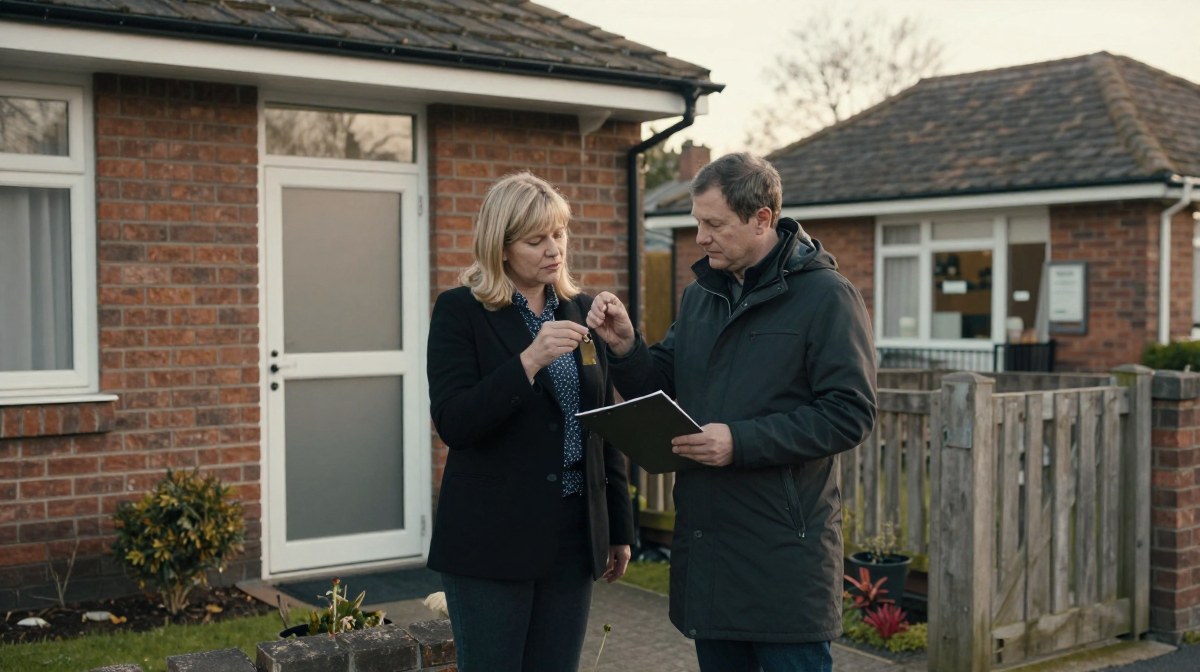
In short: From 10 August 2026, a new limited recourse borrowing arrangement (LRBA) that an SMSF uses to buy real property can only be used for business real property - broadly, land and buildings used wholly and exclusively in a business. Residential investment property is out for new borrowing. SMSF commercial property loans remain available: LRBAs entered before 10 August 2026, refinancing them, and contracts exchanged before that date sit outside the change. This is general information, not financial advice.
Key takeaways
- The change: from 10 August 2026, real property bought under a new LRBA must be business real property within section 66 of the SIS Act.
- Outside the change: LRBAs entered before 10 August 2026, refinancing them, and contracts exchanged before that date.
- The LRBA mechanics are unchanged: a holding trust, a single acquirable asset, lender recourse limited to that asset, and no improvements funded with the borrowed money.
- A fund with no more than six members can buy business real property from a related party at market value and lease it to the members' business at market rent.
- In the worked example, rent and contributions cover repayments with about $30,000 a year to spare - but if the tenant stops paying, the fund's liquid assets carry the loan.
- Fewer lenders offer SMSF loans, LVRs are lower and documents stricter; get licensed advice before the fund signs a contract.
What changed on 10 August 2026?
The Treasury Laws Amendment (Tax Reform No. 1) Act 2026 amended the borrowing exception in the superannuation law. In the compilation of the Superannuation Industry (Supervision) Act 1993 in force from 10 August 2026, section 67A now says that for an asset that is real property, the asset must be business real property (within the meaning of section 66) to be an acquirable asset under an LRBA.
The ATO's page on changes to limited recourse borrowing arrangements sets out what sits outside the change: LRBAs entered into before 10 August 2026, refinancing of those arrangements, and binding contracts to buy real property exchanged before 10 August 2026. Other acquirable assets, such as listed shares, are not affected.
| Situation | New LRBA for real property possible? |
|---|---|
| Warehouse, shop or office used wholly and exclusively in a business, contract from 10 August 2026 | Yes - business real property |
| Residential investment property, contract from 10 August 2026 | No |
| Existing LRBA over residential property entered before 10 August 2026 | Outside the change; can continue |
| Refinancing that existing LRBA | Outside the change |
| Contract exchanged before 10 August 2026, settling later | Outside the change |
Questions about the edges - a contract with conditions, a later change of use, a variation to an old loan - need specific advice. Do not rely on a summary for them.
What counts as business real property?
Section 66 of the SIS Act defines business real property as a freehold or leasehold interest in real property (and certain Crown land interests) where the property is used wholly and exclusively in one or more businesses, whether carried on by the fund or not. Three practical points follow:
- The business does not have to be the members'. A shop leased to an unrelated retailer is used in the retailer's business, so it can qualify.
- "Wholly and exclusively" is strict. A property that includes a residence used privately - a shop with a flat upstairs, for example - is unlikely to qualify. The Act has a specific allowance for primary production land with a dwelling on no more than 2 hectares used for private purposes (section 66(6)).
- Vacant commercial property needs care. Whether an empty building, or land awaiting a tenant, is "used in a business" is a question for your adviser before the contract, not after.
How does an SMSF limited recourse borrowing arrangement work?
The mechanics in section 67A are unchanged by the 2026 amendment:
- Holding trust. The property is held on trust - usually by a separate holding (bare) trustee company - so the SMSF has the beneficial interest and the right to take legal title once the loan is repaid.
- Single acquirable asset. The borrowing must be for one asset. Property across several titles can raise questions about whether it is one asset; get advice.
- Limited recourse. The lender's rights on default are limited to that asset. The Act's example notes that a guarantor's right to be indemnified by the fund is also limited to the asset - which is why lenders take personal guarantees from the members.
- No improvements with borrowed money. Borrowed money can cover the purchase and costs such as stamp duty, and maintaining or repairing the asset, but not improving it.
- Refinancing the borrowing over the same asset is permitted.
Our explainer on SMSF loans and limited recourse borrowing walks through the documents. Moneysmart's guide to running a self-managed super fund covers the trustee duties that come with any of this.
Can the SMSF lease the property to my business?
Yes, within limits. For a fund with no more than six members, section 66(2)(b) allows the fund to buy business real property from a related party at market value - for example, buying the premises your own company owns. Section 71(1)(g) means business real property leased to a related party under a lease enforceable by legal proceedings is not an in-house asset, as long as it remains business real property throughout the lease. Section 109 requires the fund to deal on arm's length terms.
In practice that means a written lease at market rent, supported by evidence; rent actually paid on time; outgoings handled as the lease says; and no rent holidays a commercial landlord would not give. A fund that lets a struggling related tenant skip rent is no longer dealing at arm's length. The lender will also read the lease, because the rent is what services the loan.
How do the numbers work in a worked example?
Figures for illustration only. An SMSF with two members and $700,000 of assets buys a warehouse for $1,000,000 to lease to the members' company at a market rent of $65,000 a year net (a 6.5% yield). Duty and purchase costs are $60,000. The lender lends 60% of value under an LRBA.
| Item | Amount |
|---|---|
| LRBA loan (60% of $1,000,000) | $600,000 |
| Fund's contribution to the price | $400,000 |
| Duty and costs paid by the fund | $60,000 |
| Fund assets left after settlement | $240,000 |
| Repayments: 15 years at an illustrative 7.5%, principal and interest | $66,745 a year ($5,562 a month) |
| Rent | $65,000 |
| Members' contributions after contributions tax (within the caps) | $40,000 |
| Fund running costs (accounting, audit, levies) | $8,000 |
| Surplus after repayments | $30,255 |
Check: $65,000 + $40,000 - $8,000 = $97,000, less $66,745 of repayments, leaves $30,255. Now stress it. If the members' business fails and rent stops, contributions less costs bring in $32,000 against $66,745 of repayments - a shortfall of $34,745 a year. The $240,000 of other assets would cover that for about seven years, but those assets are also the members' retirement savings, and the lender can only sell the warehouse. Test your fund's numbers in the SMSF LRBA calculator.
What do lenders want for an SMSF commercial property loan?
| Area | Typical expectation (indicative, varies by lender) |
|---|---|
| LVR | Around 60-70% of the valuation for commercial property |
| Trustees | Many lenders want a corporate trustee for the fund and for the holding trust |
| Liquidity | A buffer of liquid assets left in the fund after settlement |
| Serviceability | Market rent plus regular contributions; some lenders also look at the members' own position as guarantors |
| Documents | Fund deed permitting borrowing, investment strategy, holding trust deed, the lease, two years of fund financials and audit reports, member statements |
| Security | Mortgage over the property held by the holding trustee, plus personal guarantees from members |
Pricing sits above ordinary commercial lending because recourse is limited and the documents are specialised. Rates move with the RBA's cash rate target, which was 4.60% from 30 September 2026; the board reviews it on fixed dates (see the RBA's 2026 meeting dates), so check the current target before the fund signs. Read our guide to directors' guarantees and what you sign before the members sign.
What mistakes do SMSF borrowers make?
- Signing the contract in the wrong name. The holding trustee usually signs as purchaser. Fix the structure before exchange; correcting it after can cost duty.
- Assuming any commercial building qualifies. Check the "wholly and exclusively" test against the property's actual use, including any residence on it.
- Planning to renovate with the loan. Borrowed money cannot fund improvements. Budget for works from the fund's own cash, and get advice on whether they change the asset.
- Leaving too little liquidity. A fund with nothing left after settlement cannot carry a vacancy or a missed rent payment.
- Treating the related-party lease loosely. Market rent, written terms and rent actually paid are legal requirements, not formalities.
For the wider lending picture, see commercial property loans: LVR and lease doc. When the fund's adviser has confirmed the strategy, post one commercial property loan request on ADS and 200+ verified lenders and brokers can ask about it. Speak to a licensed financial adviser and your SMSF accountant before acting.
Frequently asked questions
Can an SMSF still borrow to buy commercial property in 2026?
Yes. From 10 August 2026, real property bought under a new limited recourse borrowing arrangement must be business real property - land and buildings used wholly and exclusively in a business. Commercial premises such as warehouses, shops and offices used in a business can qualify. The fund still needs a holding trust, a single asset and a lender willing to offer SMSF loans.
Can my SMSF still borrow to buy a residential investment property?
Not under a new arrangement. Since 10 August 2026, a new LRBA can only be used to buy real property that is business real property, and a house or apartment let to tenants is not used wholly and exclusively in a business. LRBAs entered before that date, refinancing them, and contracts exchanged before it sit outside the change.
Can I refinance my existing SMSF residential property loan?
The ATO says refinancing an LRBA entered before 10 August 2026 sits outside the change. Lender appetite is a separate question, because fewer lenders offer SMSF loans and each has its own policy. Confirm the details of your existing arrangement with your adviser before you refinance, particularly if the loan terms or the asset will change.
Can my SMSF buy my business premises from me?
For a fund with no more than six members, the SIS Act allows the fund to buy business real property from a related party at market value. The fund can then lease it back to your business under a written lease at market rent. Get an independent valuation, a properly drafted lease and licensed advice, and expect duty on the transfer.
Can an SMSF borrow to build on vacant commercial land?
Generally not with the borrowed money. Under section 67A, money borrowed under an LRBA can fund the purchase and its costs, and maintaining or repairing the asset, but not improving it - and constructing a building would be an improvement that may also change the asset itself. Vacant land must also be business real property. Take specific advice before attempting any development inside an SMSF.
What LVR do lenders offer on SMSF commercial property loans?
Indicatively, around 60-70% of the valuation, varying by lender, property type and the fund's position. Lenders also look at liquidity left in the fund after settlement, rent and contributions, the trustee structure and the members' strength as guarantors. Because recourse is limited to the property, pricing is usually above ordinary commercial lending.
Related reading
- SMSF Loans: Limited Recourse Borrowing Explained
- Commercial Property Loans: LVR and Lease Doc
- Directors' Guarantees: What You Sign
Sources
- Superannuation Industry (Supervision) Act 1993 (compilation in force from 10 August 2026) - sections 66, 67A, 71 and 109 — Federal Register of Legislation
- Changes to limited recourse borrowing arrangements — Australian Taxation Office
- Self-managed super fund (SMSF) — ASIC Moneysmart
- Cash rate target — Reserve Bank of Australia
- 2026 Monetary Policy Board meeting dates — Reserve Bank of Australia
Rates checked as at 24 October 2026. Interest rates, lender policies and government schemes change frequently. Figures in this article are illustrative and were accurate at the date shown.
General advice warning: This article contains general information only. It does not take into account your objectives, financial situation or needs, and it is not personal credit or financial advice. Consider whether it is appropriate for you and seek advice from a licensed credit representative before acting.
Any interest rate shown is an example only and is not an offer of credit. Where a rate is quoted, the applicable comparison rate is available from the relevant lender and should be considered alongside it.
Tags
Related Posts
Vendor Finance When Buying a Business: How Seller Loans Work With a Lender
Vendor finance when buying a business means the seller lets you pay part of the price later, as a vendor loan or deferred payments, so the bank or other senior lender funds less on day one. Senior...

Fixed-Price vs Cost-Plus Building Contracts: How Each Changes Your Construction Loan
A fixed-price building contract lets a lender size your construction loan against a known cost, follow the contract's progress payment schedule and ask for little contingency. A cost-plus contract...
Commercial Property Loans and Valuations: Cap Rates, WALE and Vacancy
For a commercial property loan, the lender lends against its valuer's figure, and for income property that figure mostly comes from capitalising net income: net rent divided by a market capitalisat...