
Small-Scale Development Finance: Funding Two to Ten Units
ADS Team
Author
November 12, 2026
1 day ago
10
views
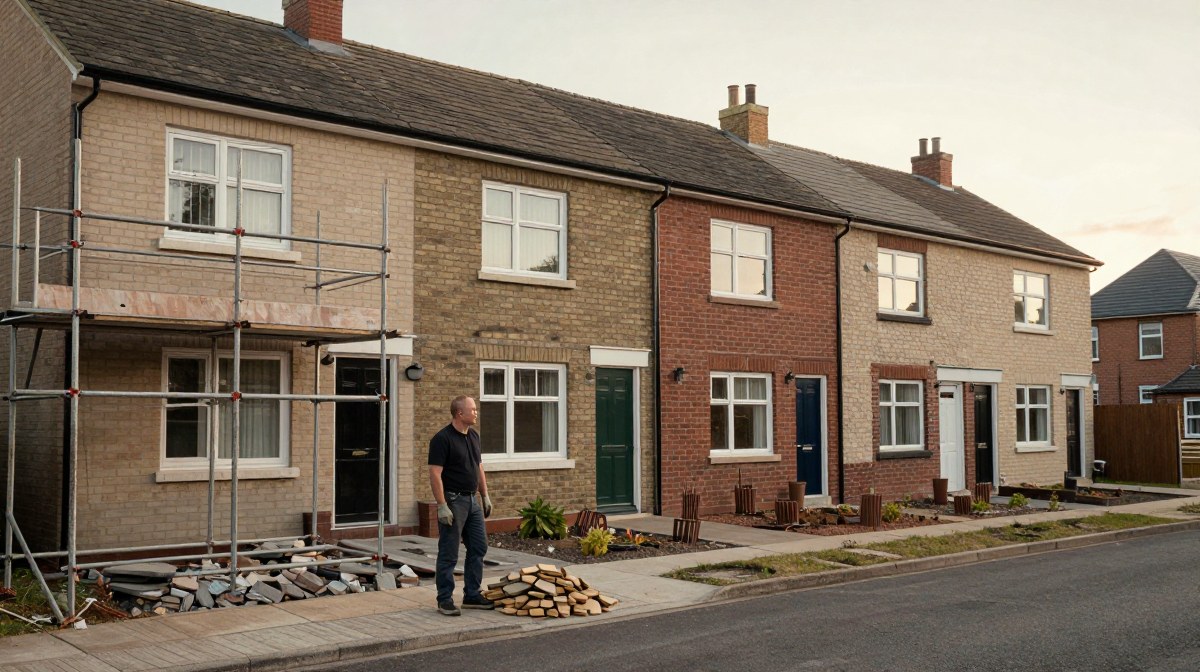
In short: Small-scale development finance funds projects of roughly two to ten dwellings, such as duplexes, townhouses and small unit blocks. Banks, non-banks and private lenders all lend in this space, on different terms: expect to contribute meaningful equity, commonly 20% to 35% of total cost (indicative), to have the valuer assess each finished dwelling, and to be judged on your builder as much as on yourself. Decide early whether you will sell or hold, because it changes the loan.
Key takeaways
- Small projects can be funded by banks, non-banks or private lenders; the right fit depends on your experience, equity, pre-sales and whether you will hold.
- In the worked example, four townhouses costing $3.8 million need about $964,000 to $1.14 million of equity depending on the lender's caps.
- Valuers assess the site "as is" and each dwelling "as if complete"; the lender lends on those figures, not your projections.
- For first-time developers, the builder's licence, insurance, fixed-price contract and track record carry heavy weight.
- Smaller projects are often funded without pre-sales by some lenders, at lower leverage or higher cost (indicative).
- Holding the dwellings means refinancing into investment debt, where rent must service the loan and GST adjustments may apply.
What counts as small-scale development, and who lends on it?
There is no legal definition, but lenders generally treat projects of about two to ten dwellings as a distinct segment: too big for an ordinary residential construction loan on one home, too small for the large-project teams at major lenders. Typical projects are a duplex on a single block, three to six townhouses, or a small walk-up unit block.
| Lender type | Where it tends to fit (indicative) | Trade-offs |
|---|---|---|
| Banks | Experienced borrowers, strong income or other assets, smaller projects that resemble residential construction | Lower leverage on cost, stricter on experience and pre-sales, slower credit process |
| Non-bank lenders | Developers with some track record, projects without full pre-sales | Higher rate and fees, capitalised interest common |
| Private lenders and private credit funds | First-time developers, tight timelines, borrowers outside bank policy | Higher pricing again, short terms, a strong focus on exit |
Some banks will treat a duplex or two dwellings as a residential construction loan if you will live in or hold one of them, which can mean lower pricing (indicative; check each lender). Beyond that, the project is usually assessed as a commercial development, with a feasibility study, a project valuation and a profit test. For the broader mechanics, see construction and development finance.
How much equity does a small development need? A worked example
For illustration: four townhouses on a $1,200,000 site, sold at $1,200,000 each including GST. Every figure is an example, not a quote or any lender's policy.
| Line | Amount |
|---|---|
| Land | $1,200,000 |
| Acquisition costs (duty, legal; state-specific) | $65,000 |
| Construction (4 x $450,000, excluding GST) | $1,800,000 |
| Professional fees (10% of construction) | $180,000 |
| Council contributions and authority fees | $90,000 |
| Contingency (7.5% of construction) | $135,000 |
| Finance costs | $210,000 |
| Selling costs (2.5% of $4,800,000) | $120,000 |
| Total development cost | $3,800,000 |
| Gross realisation (4 x $1,200,000) | $4,800,000 |
| Less GST under the margin scheme (($4,800,000 - $1,200,000) / 11) | -$327,273 |
| Profit | $672,727 (17.7% on cost) |
Now apply two illustrative lenders. Lender 1 caps the loan at 70% of cost. Lender 2 caps it at 80% of cost and also at 65% of gross realisation excluding GST ($4,800,000 / 1.1 = $4,363,636).
| Lender (illustrative) | Cost cap | Value cap | Loan | Equity required |
|---|---|---|---|---|
| Lender 1: 70% of cost | $2,660,000 | - | $2,660,000 | $1,140,000 |
| Lender 2: 80% of cost, 65% of value | $3,040,000 | $2,836,364 | $2,836,364 | $963,636 |
Lender 2's higher cost cap is overridden by its value cap, so the extra leverage is smaller than the headline suggests. The equity can be cash, equity in the site if the lender's valuer supports it, or in some cases security over another property. A 17.7% profit on cost is also close to many lenders' minimums (indicative), which is a further reason a lender may hold back on leverage.
How does the valuer assess a small development?
The lender's valuer usually reports several numbers, and the loan is sized from them, not from your feasibility study:
- "As is" land value, with the development approval if one is in place. This sets what the lender will advance against the land at the start.
- "As if complete" value of each dwelling, from comparable sales of similar new product nearby. The sum is the gross realisation.
- A "bulk" or in-one-line value in some reports: what the finished dwellings would fetch if sold together to one buyer. It is lower than the sum of individual prices and shows the lender its downside.
- A review of costs, sometimes by a quantity surveyor, to confirm the build price is realistic and that the facility covers the cost to complete.
Comparable evidence is the weak point on small projects. If there are few recent sales of new townhouses in the street, the valuer will lean on older or more distant sales, and the figure may come in below your expectations. Supply your own evidence to the valuer through the lender, with addresses, dates and floor areas.
Why does the builder matter so much?
On a small project, the builder is the biggest single risk the lender can see. A builder that fails halfway leaves a partly built project that costs more to finish than to start. Lenders typically look for:
- A current licence for the class of work, and the home building insurance or warranty cover your state requires for residential work.
- A fixed-price contract, with provisional sums kept small.
- A track record of comparable projects, with addresses the lender can check.
- Financial capacity: some lenders review the builder's financial position or credit file.
- Realistic timing and a payment schedule that matches work done, with each claim inspected before payment.
Choosing the builder on price alone is a common mistake on a first project. A quote well below others may mean missing scope, thin margins or a builder who needs the deposit to fund another job. If you are building as an owner-builder rather than with a licensed builder, expect far fewer lenders and lower leverage.
What do lenders want from a first-time developer?
Experience reduces risk, so lenders ask about it. A first-time developer can offset the lack of a track record with a strong team: an experienced builder, an architect or designer who has done similar projects, a project manager, and a quantity surveyor. Expect lower leverage, more equity and possibly a requirement for some pre-sales, or for security over another property (indicative).
Structure matters too. Many small developments are run through a company or a trust created for the project. business.gov.au's guide to business structures sets out the options, and ASIC's guidance on becoming a company director explains the duties you take on if you use a company. Lenders almost always ask the directors or trustees to sign personal guarantees; directors' guarantees explained covers what that commits you to, and lenders that accept trust and company borrowers covers how lenders assess those structures.
Do you need pre-sales for two to ten units?
Often not. Many lenders fund small projects without pre-sales, especially townhouses that buyers can see near completion, relying instead on lower leverage, the developer's other assets or a higher price (indicative). Banks are more likely than other lenders to ask for some pre-sales, particularly for units, first-time developers or weaker markets.
Whether to pre-sell is a commercial choice as well as a funding one. Off-the-plan buyers usually expect a discount, while selling at completion lets you capture the finished price but carries the market risk through the build. On a four-dwelling project, one or two pre-sales may be enough to change a lender's view, without giving away the whole upside.
Should you hold or sell the finished dwellings?
Holding means refinancing the development loan into investment debt once the dwellings are complete. The test changes from "will the sales repay the loan?" to "will the rent and your income service it?"
For illustration: debt at completion of $2,836,364, rent of $750 a week per townhouse ($156,000 a year for four), and an investment rate of 6.8% (an example, not an offer). Interest alone is $192,873 a year, $36,873 more than the gross rent, before rates, insurance, maintenance and land tax. Lenders usually also count only part of the rent and assess at a buffered rate, so most borrowers holding all the stock need other income or must sell some dwellings to reduce the debt.
Tax changes with the decision. If you built to sell and claimed GST credits, then rent the dwellings instead, GST adjustments may claw back some of those credits, because residential rent is input taxed under the GST Act. Most states also charge land tax on investment land; check your state's rules, for example Revenue NSW's land tax page. This is general information, not tax advice; speak to your accountant before deciding. If you hold some stock while selling the rest, residual stock loans for developers covers the bridge between the two.
What should you prepare before you ask a lender?
- The development approval and its conditions, or a clear status and timeline.
- A feasibility study with evidence for prices and costs; test it in the development feasibility calculator.
- The builder's fixed-price contract, licence, insurance and examples of similar work.
- Your equity: where it comes from and when it goes in.
- Your plan for each dwelling: sell, hold or a mix, with the numbers for each.
- Your entity structure and who will sign personal guarantees.
When the file is ready, post one development finance request on ADS and 200+ verified lenders and brokers can ask about it.
Frequently asked questions
Can I get development finance for a duplex?
Yes. Some lenders fund a duplex as a residential construction loan, especially if you will live in or keep one dwelling, while others assess it as a small development with a feasibility study and profit test (indicative). The approach affects pricing, leverage and documents, so ask each lender which way it will treat the project.
How much deposit do I need for a small development?
Commonly 20% to 35% of total development cost (indicative), depending on the lender, your experience, the margin and whether there are pre-sales. In the illustrative four-townhouse example, equity ranges from about $964,000 to $1.14 million on a $3.8 million cost. Land equity can sometimes count towards it.
Do banks lend to first-time developers?
Some do on small projects, usually with lower leverage, a strong builder and project team, good personal income or assets, and sometimes pre-sales (indicative). Many first-time developers use non-bank or private lenders for the first project, then move to banks once they have a track record.
Should I use a company or trust for a small development?
Many developers do, to separate the project from other assets and for tax reasons, but lenders will usually still ask the directors or trustees for personal guarantees. The right structure depends on your tax position and plans for the dwellings, so speak to your accountant and lawyer before you buy the site.
Can I keep the townhouses after building them?
Yes, by refinancing into investment loans once they are complete. The lender then assesses whether rent and your other income can service the debt at a buffered rate. Holding can also trigger GST adjustments if you claimed credits while building to sell, so get tax advice first.
Related reading
- Construction and Development Finance
- Residual Stock Loans for Developers
- Directors' Guarantees: What You Sign
Sources
- Business structures — business.gov.au
- Becoming a company director — Australian Securities and Investments Commission
- A New Tax System (Goods and Services Tax) Act 1999 — Federal Register of Legislation
- Land tax — Revenue NSW
Information current as at 24 October 2026.
General advice warning: This article contains general information only. It does not take into account your objectives, financial situation or needs, and it is not personal credit or financial advice. Consider whether it is appropriate for you and seek advice from a licensed credit representative before acting.
Any interest rate shown is an example only and is not an offer of credit. Where a rate is quoted, the applicable comparison rate is available from the relevant lender and should be considered alongside it.
Tags
Related Posts
As-If-Complete Valuations: How Construction Loans Are Sized
Lenders size construction loans on the as-if-complete valuation: the valuer's estimate of what the finished property would be worth today, built to the plans and contract. The loan is usually the l...

Business Loan Covenants: ICR, DSCR and LVR Tests and What a Breach Means
A covenant is a promise in your facility agreement to keep certain numbers inside agreed limits and to report on time. In business loans and commercial property loans the usual financial tests are...

Due Diligence for Buying a Business: What Your Lender Expects to See
When you borrow for buying a business, the lender relies on your due diligence as much as its own. Expect to show three to five years of financial records reconciled to BAS and bank statements, a l...