
Residual Land Value: The Maths Property Developers Use to Price a Site
ADS Team
Author
November 4, 2026
about 11 hours ago
8
views
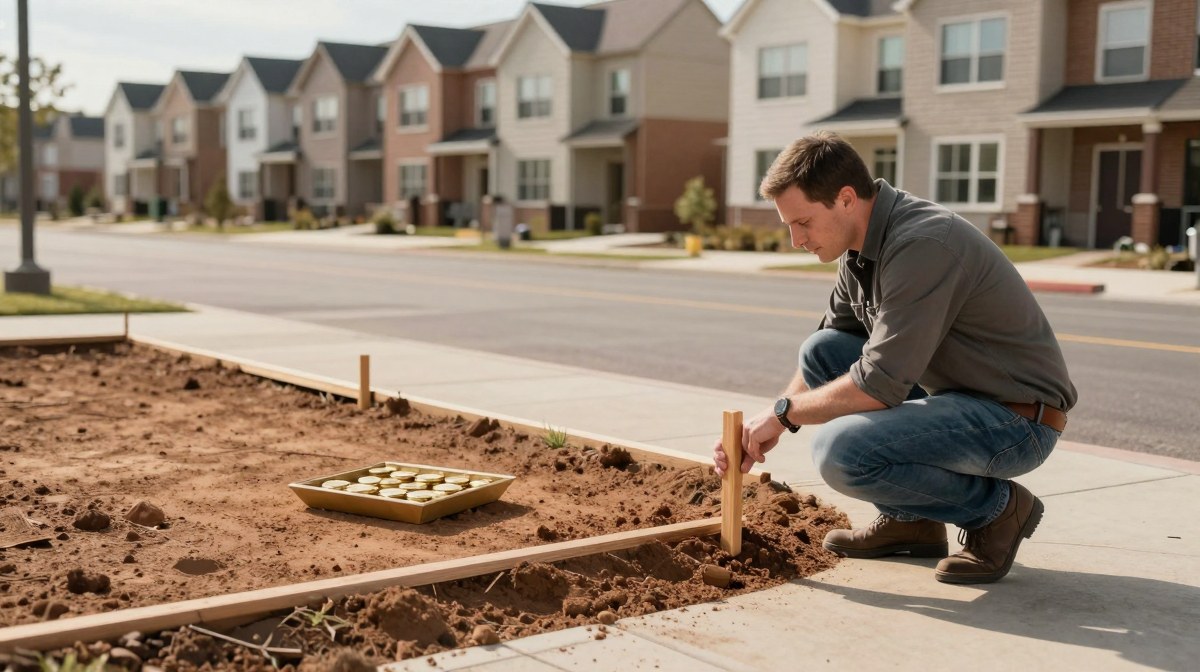
In short: Residual land value is the most a developer can pay for a site and still make the target profit: start with what the finished product will sell for, take off GST, every development cost and the required profit, and what is left is the land budget. Because land is the remainder, small errors elsewhere land on it in full. Property developers use it to price sites, and lenders offering development finance use it to check whether you paid too much.
Key takeaways
- Residual land value = net realisation, less the maximum total cost at your target profit, less every non-land cost, then less acquisition costs.
- In the worked example, eight townhouses selling for $7.2 million support a land price of about $1.25 million at 20% profit on cost.
- A 5% fall in sale prices cuts that land value by about 20%; a 10% rise in build costs cuts it by about 26%.
- Lowering the profit target lifts what you can pay, but lenders have their own hurdle, so the gain may not be fundable.
- If the margin scheme is available, the example land value rises by about $97,000, because GST is charged on the margin rather than the full price.
- Lenders value the land on evidence, not on your contract price; paying above the residual means more equity from you.
What is residual land value?
There are two ways to value a development site. One compares it with sales of similar sites. The other, the residual method, works backwards from the project: what the finished dwellings will sell for, less everything it costs to produce them, less a profit for the risk. Whatever is left is what the land is worth to a developer.
The residual method answers the question a developer actually has: "What can I afford to pay for this site?" Comparable site sales answer a different one: "What have other people paid?" The two often disagree, and the gap is useful. If the market is paying more for sites than the residual supports, either buyers expect prices to rise, they accept a thinner profit, or someone has their numbers wrong.
It is also the backbone of a feasibility study. A full feaso starts with a land price and solves for profit; the residual starts with a profit and solves for land. If you have read construction and development finance, this is the calculation that sits underneath the loan sizing it describes.
How do you calculate residual land value, step by step?
For illustration: a site with consent for eight townhouses, each expected to sell for $900,000 including GST. The developer wants 20% profit on cost. Every figure is an example, not a valuation or a lender's requirement.
| Step | Calculation | Result |
|---|---|---|
| 1. Gross realisation | 8 x $900,000, including GST | $7,200,000 |
| 2. Less GST | $7,200,000 / 11, assuming GST on the full price | -$654,545 |
| 3. Net realisation | $7,200,000 - $654,545 | $6,545,455 |
| 4. Maximum total cost at 20% profit on cost | $6,545,455 / 1.20 | $5,454,545 |
| 5. Less non-land costs | See the next table | -$4,135,600 |
| 6. Available for land plus acquisition costs | $5,454,545 - $4,135,600 | $1,318,945 |
| 7. Residual land value | $1,318,945 / 1.055 (acquisition costs of 5.5% of the price) | $1,250,185 |
Check it forwards: land of $1,250,185 plus acquisition costs of $68,760 plus non-land costs of $4,135,600 is a total cost of $5,454,545. Net realisation of $6,545,455 less that cost leaves $1,090,910, which is 20.0% of cost. The maths closes.
Step 4 is the one people get wrong. Profit on cost is measured against total cost, which includes the land you are solving for, so you cannot simply subtract 20% of revenue. Dividing net realisation by 1.20 gives the most the whole project can cost and still return 20% on that cost.
The 5.5% for acquisition costs is illustrative. Transfer duty depends on the state, the price and the buyer; check it with your state revenue office, for example Revenue NSW's transfer duty page or the SRO Victoria land transfer duty page, and add legal and due diligence costs.
What goes into the non-land costs?
| Cost | Basis (illustrative) | Amount |
|---|---|---|
| Construction | 8 x $380,000, excluding GST | $3,040,000 |
| Professional fees | 9% of construction | $273,600 |
| Council contributions and authority fees | From consent conditions and utility quotes | $160,000 |
| Contingency | 5% of construction | $152,000 |
| Finance costs | Interest and fees over the program | $330,000 |
| Selling costs | 2.5% of gross realisation | $180,000 |
| Total non-land costs | $4,135,600 |
Two simplifications are worth knowing. First, finance costs are held fixed here; in reality a cheaper site means a smaller loan and less interest, so a proper model recalculates finance for each land price until the answer settles. Second, holding costs before construction (land tax, council rates, insurance while the design and consent are finalised) belong in the costs too. Include them; they are easy to forget and they are paid in cash.
Construction cost is the biggest input. Use a builder's price or a quantity surveyor's estimate, and test it against cost trends: the ABS Producer Price Indexes report building construction output prices each quarter.
Why is residual land value so sensitive to sale prices and build costs?
Because land is the remainder. Every other number is subtracted from the realisation, so a change in any of them falls entirely on the land, and the land is a small number compared with the revenue it is carved from.
| Change (same example) | Residual land value | Change in land value |
|---|---|---|
| Base case | $1,250,185 | - |
| Sale prices up 5% ($945,000 each) | $1,500,164 | +20.0% |
| Sale prices down 5% ($855,000 each) | $1,000,207 | -20.0% |
| Sale prices down 10% ($810,000 each) | $750,228 | -40.0% |
| Construction cost up 10% ($418,000 each) | $921,692 | -26.3% |
A 5% movement in sale prices moves the land value by about 20%, four times as much. That is why two developers looking at the same site can arrive at very different prices: small differences in assumed sale prices, build rates or profit targets become large differences in land value.
It also explains why sites trade on optimism in a rising market. A buyer who assumes prices will be 5% higher at completion can justify paying about $250,000 more for this site. If prices do not rise, that buyer has paid for profit that never arrives.
How does the profit target change what you can pay?
| Target profit on cost | Maximum total cost | Residual land value |
|---|---|---|
| 15% | $5,691,700 | $1,474,976 |
| 20% | $5,454,545 | $1,250,185 |
| 25% | $5,236,364 | $1,043,378 |
Accepting 15% instead of 20% lets you pay about $225,000 more. That is a legitimate choice if you have low costs of capital and a lot of equity. The catch is the lender. Many senior lenders look for profit on cost of roughly 15% to 20% or more on residential projects (indicative; it varies by lender and project). If your price assumes a profit below the lender's hurdle, the project may not be fundable on the terms you expected, and the alternatives that accept thinner margins usually cost more, which lowers the profit again.
How do GST and the margin scheme change the residual?
The base case assumes GST of one eleventh of the full sale price. Under the margin scheme, GST is one eleventh of the margin instead: broadly, the sale price less what you paid for the land. The rules sit in Division 75 of the GST Act. Whether you can use the scheme depends on how you acquired the land, and it needs a written agreement with the buyer before settlement, so confirm it with your accountant before a site price relies on it.
If the scheme is available in the example, GST falls to about $532,100, net realisation rises, and the residual land value rises to about $1,346,904, roughly $97,000 more than the base case. The calculation is circular (GST depends on the land price, which depends on GST), so it is solved algebraically or by iteration rather than in one pass.
This is general information, not tax advice. The difference between the two treatments is large enough that getting it wrong can turn a site from fundable to not.
Why do lenders recheck the residual land value?
A lender lends against value, not against what you paid. Its valuer will usually run a residual and check it against comparable site sales. If you paid more than the evidence supports, the lender's numbers start from the lower figure.
For illustration, say you pay $1,400,000 for the example site and the lender lends 60% of land value on the land component (indicative). On your price that would be $840,000. On a valuation of $1,250,185 it is $750,111, so you must find $89,889 more in equity. The project's profit also falls: at a $1,400,000 land price, profit on cost drops from 20.0% to 16.6%, closer to the edge of many lenders' hurdles.
The worked method for those ratios is in LVR and equity: worked calculations. Duty compounds the problem, because you pay it on the price you agreed, not on the value the lender accepts; stamp duty vs land tax covers how those state taxes are changing.
What mistakes do developers make with the residual method?
- Starting from the asking price. Working out how to justify the vendor's price, instead of what the project supports.
- Using today's prices for sales two years away without testing lower ones.
- Leaving out holding costs between purchase and construction, especially if the consent takes longer than planned.
- Ignoring consent conditions. Contributions, road works, design changes and affordable housing requirements can move costs by hundreds of thousands.
- Counting contingency twice, or not at all.
- Fixing finance at a round number instead of recalculating it for the land price and program.
- Assuming the margin scheme without checking that it is available.
How should you use residual land value before you make an offer?
- Run the residual at your expected prices and costs, then at prices 5% and 10% lower and costs 10% higher.
- Make your offer from the downside case, not the base case. Use the base case to see your upside.
- Compare the residual with recent site sales nearby. A large gap means someone's assumptions are off.
- Check the profit target against what lenders will accept, and the equity you will need if the valuation comes in below your price.
- Put the full model into the development feasibility calculator and confirm it matches your spreadsheet.
When you have a site under contract and numbers that hold up, post one development finance request on ADS and 200+ verified lenders and brokers can ask about it.
Frequently asked questions
What is the residual method of valuation?
It values land by working backwards from a project: the expected sale value of the finished development, less GST, construction and other costs, finance, selling costs and a profit for the risk. What remains is the most a developer could pay for the land. Valuers use it alongside comparable site sales.
What profit should I use in a residual land value calculation?
Use the profit you need and that a lender will fund. Many senior lenders look for profit on cost of roughly 15% to 20% or more on residential projects (indicative). A lower target lets you pay more for the site, but may leave the project below the lender's hurdle.
Why does residual land value change so much when prices move?
Because the land is what is left after every other cost and the profit are subtracted from revenue. Revenue is several times the land value, so a small percentage change in revenue is a large percentage change in land value. In the worked example, a 5% price change moves land value by about 20%.
Do I include stamp duty in residual land value?
Yes, as an acquisition cost. The residual first gives the amount available for land plus acquisition costs; you then take out duty, legal and due diligence costs to find the price you can offer. Duty varies by state and price, so calculate it on your state revenue office's site.
Will a lender accept my residual land value?
It will read it, but rely on its own valuer, who usually runs a residual and checks it against comparable site sales. If your figure is higher than the valuation, the lender lends on the lower figure and you contribute the difference as extra equity.
Related reading
- Construction and Development Finance
- LVR and Equity: Worked Calculations
- Stamp Duty vs Land Tax: The Shift
Sources
- Transfer duty — Revenue NSW
- Land transfer duty — State Revenue Office Victoria
- A New Tax System (Goods and Services Tax) Act 1999 (Division 75, margin scheme) — Federal Register of Legislation
- Producer Price Indexes, Australia — Australian Bureau of Statistics
Information current as at 24 October 2026.
General advice warning: This article contains general information only. It does not take into account your objectives, financial situation or needs, and it is not personal credit or financial advice. Consider whether it is appropriate for you and seek advice from a licensed credit representative before acting.
Any interest rate shown is an example only and is not an offer of credit. Where a rate is quoted, the applicable comparison rate is available from the relevant lender and should be considered alongside it.
Related Posts

Bias and Fairness Testing in Australian Credit Models
Bias and Fairness Testing in Australian Credit Models is best assessed as a decision framework rather than a headline promise. Define the purpose, compare total cost and flexibility, test the downs...

Explainable AI and Adverse Action Notices in Lending
Explainable AI and Adverse Action Notices in Lending is best assessed as a decision framework rather than a headline promise. Define the purpose, compare total cost and flexibility, test the downsi...
Machine Learning in Credit Decisioning: Gains and Regulatory Limits
Machine Learning in Credit Decisioning: Gains and Regulatory Limits is best assessed as a decision framework rather than a headline promise. Define the purpose, compare total cost and flexibility,...